
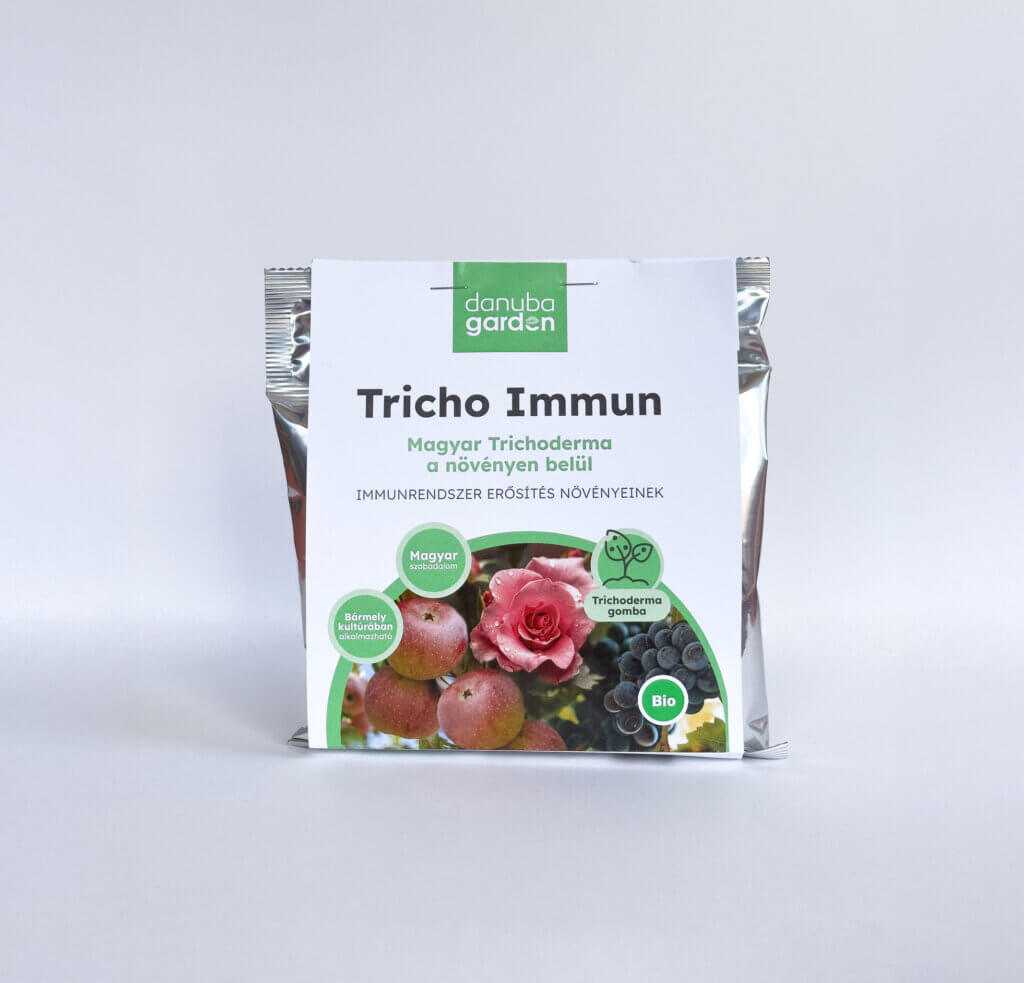
We've received a lot of useful questions from you about Tricho Immune recently, so we've put them together for you!
What can Tricho Immune be mixed with?
The general principle of mixability is that whatever helps the plant grow, stimulates the beneficial fungi in the preparation. It can be mixed with trace element solutions, foliar fertilizers, algae extracts, humic substances.
Important: Always prepare a suitable dilution of the preparation first, then mix in Tricho Immune
If you are using something (fungus, insect, weed), it is better to wait 1-2 weeks between applications.
What water should I use to prepare Tricho Immune?
The mushrooms in the preparation are not chemical substances and are less sensitive to water quality. They can grow over a wide pH range and will not become ineffective in hard water, forming a precipitate. You can prepare it in any water that you use for watering your plants (well water, rain water, stagnant tap water). Any chlorine that may be present in tap water and which is harmful to living cells can be eliminated by aerating for a few hours.
Is it recommended to activate the spores by resting after mixing?
It is not necessary to leave the product to stand after mixing, as this will not increase its effectiveness. If more than 4-5 hours elapse between mixing and application, be aware that the spores are likely to have germinated. This is can help spores to adhere to the surface of the plant, but should be used with care. After germination, the fungal filaments are already sensitive to UV, high pressure and dry conditions.

Should I add sugar to my Tricho Immune solution to promote fungal growth?
No. The small amount of glucose contained in the preparation is sufficient to trigger spore germination and initial growth.
Should sunlight be avoided at application?
If the plant also benefits from the spraying/watering, the fungi in the freshly applied preparation will not be harmed.
Is Tricho Immune only effective in warmer weather?
The fungi in the preparation are not sensitive to cold. As long as the water does not freeze in the sprayer, the treatment can be carried out. It does not like high temperatures. Above 30 ℃ they are more sensitive, other microbes overgrow and are suppressed. At 40 ℃ they die quickly.
Is protective equipment required when using it?
Fungi are not harmful to humans. However, general caution is recommended. The powdered formulation may cause irritation if inhaled or if it gets on mucous membranes. It is not intended for human use and therefore the additives are not guaranteed to be of sufficient purity.

Is it enough to use only once?
The fungi in the preparation are able to colonise the plant permanently and protect it from the inside. External damage (pruning and other mechanical damage) and external infections (pl. tafrina, monilia, powdery mildew, scab, grey mould, peronospora), an additional external application is necessary for adequate protection.
Is it necessary to use a traction enhancer? If so, what kind?
Aqueous solutions, such as Tricho Immune, will run off waxy leaves. It is recommended to use algae preparations (e.g. AscoAlga, Kelpack) to help the plant adhere to the leaves.
Do I need to mix milk with it?
No. Tricho Immune does not need to be spiked with additives (sugar, milk). The use of algae preparations is preferable to increase adhesion.
Can copper-sulphur oil be mixed with detergents?
No. More concentrated solutions of both sulphur and copper are toxic to living organisms. A waiting period of 2 weeks is recommended before/after use. Oily preparations inhibit and often destroy microbial cells.
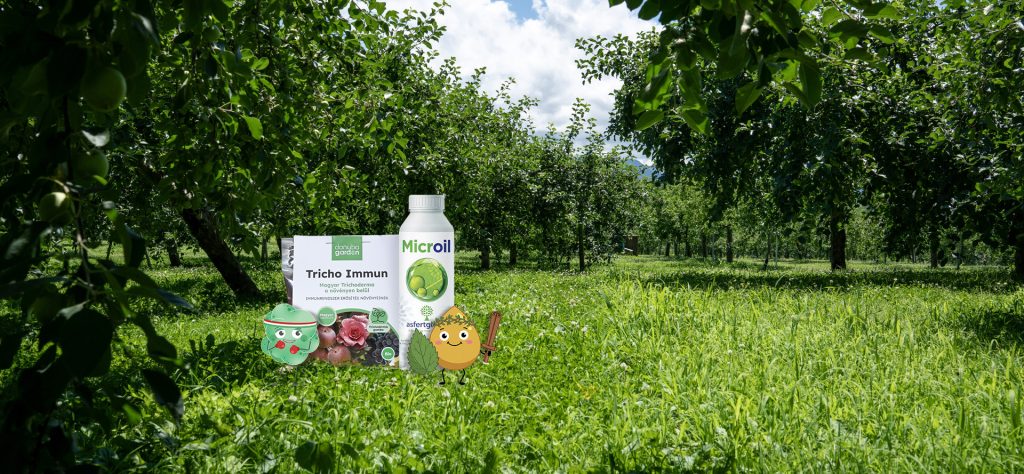
Spring protection package: Tricho Immun and MicrOil
Can it be used in flower? Does it harm bees?
They do not harm bees and no alarming effects have been observed. In flower can also be used, but it is recommended to use it at the beginning of flowering to allow time for it to multiply and thus more effectively prevent infection of the flowers.
Need to repeat for herbaceous plants, lawns, vegetables?
Yes, if a new fungal infection is expected due to environmental conditions (e.g. rainfall).
What happens in summer when it gets too hot? Can it be used then or, if it has been used before, will it die in the heat? Will the plant be unprotected in summer?
It cannot multiply and survive on the surface of the plant at 30 ℃ at temperatures above. In our experience, it tends to retract into the roots, but helps the plant tolerate drought and photosynthetic activity. However, it does not protect against new external fungal infections.
Can it be mixed with other microbiological products?
The fungi in Tricho Immun work well with mycorrhizae and do not inhibit bacterial growth. Bacterial preparations are best used in a neutral environment in warmer weather. Our fungi can multiply in a wide pH range in cold conditions. It is therefore preferable to use one or the other depending on the environmental conditions.



 Magyar
 English (UK)