

We strive to improve regularly to provide the Danuba Garden gardening community with the most useful advice.
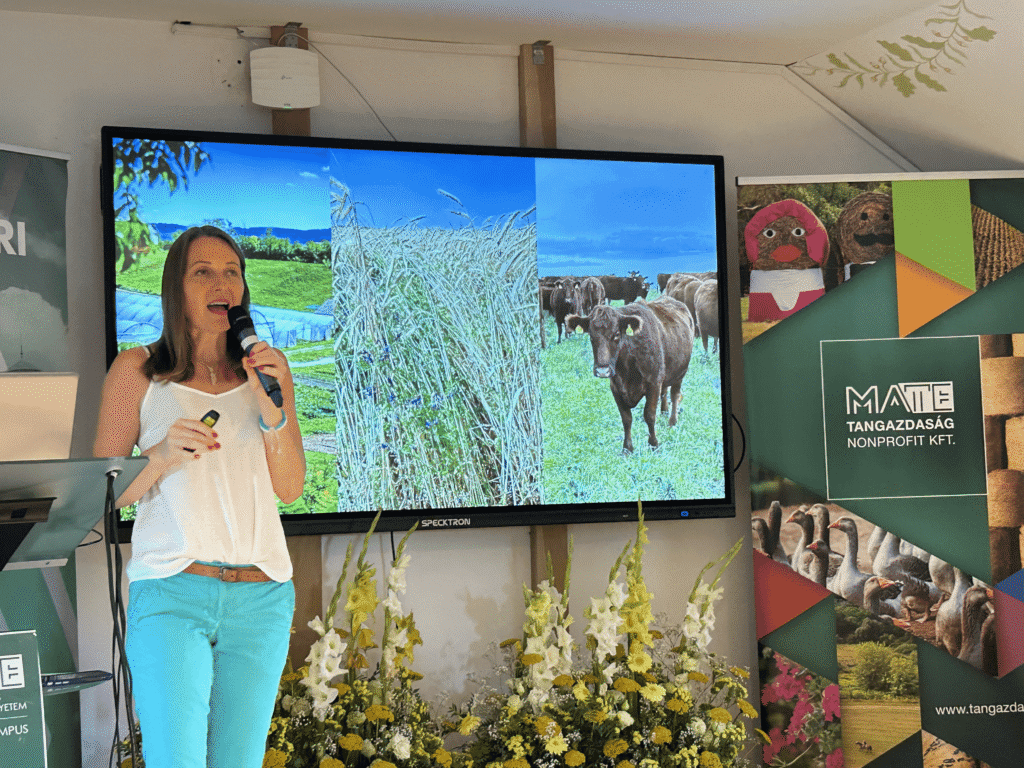
This time the "From soil life to nutritious food - principles of biological systems in practice"entitled we participated in a professional day at the MATE Deer Farm 🐮, Bőszénfa.

The event's 3️⃣ presentation on water management and soil life gave us a deep insight into the links between regenerative agriculture and healthy food production.
Dr. Csaba Gyuricza (Rector of MATE): Facts about regenerative agriculture and soil
The presentation highlighted the fact that in our country, a significant part of annual rainfall evaporates instead of being used - unlike in Israel, for example, where despite much less rainfall, efficient water management is used to produce effective agriculture.
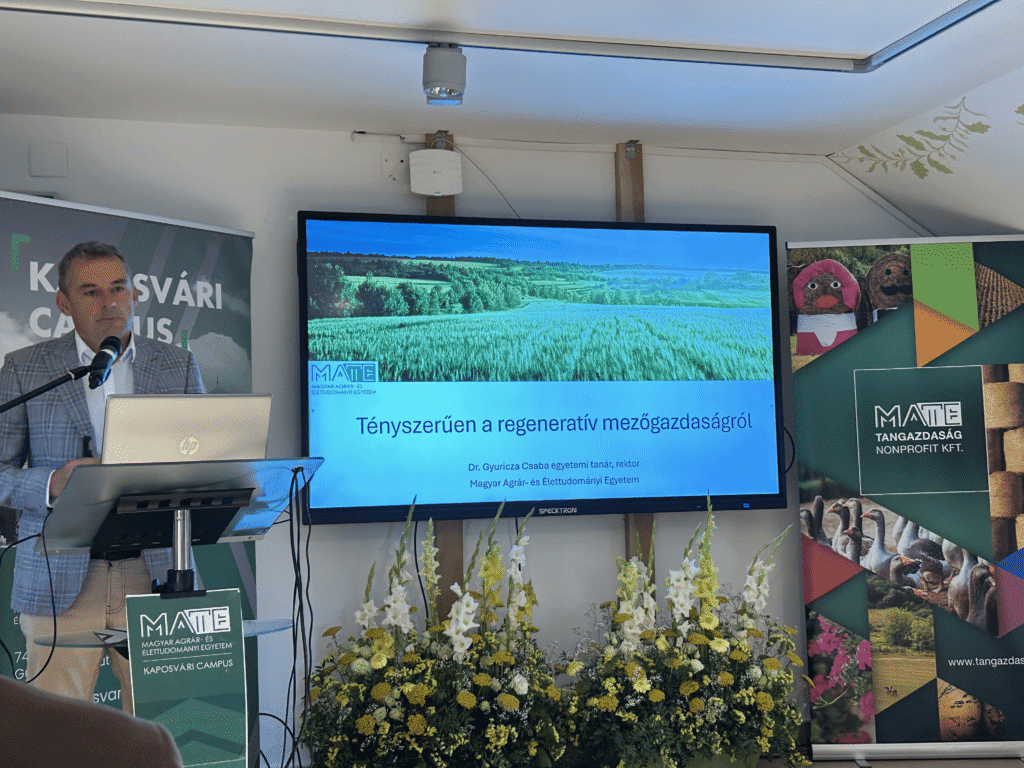
The key is to conserve soil moisture, which could be helped by reducing soil rotation, organic matter reclamation and a change in technology. Reducing ploughing and protecting living soil would require public support.
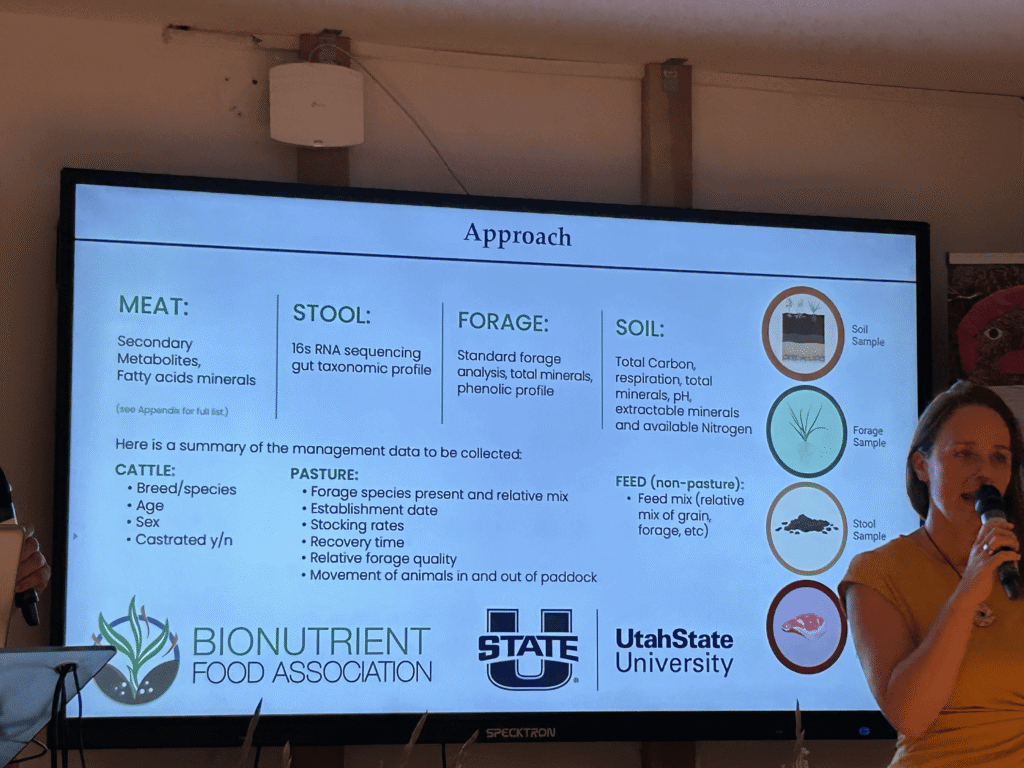
Dan Kittredge (Bionutrient Food Association): Nutrient-dense food production through living soil
🇺🇸 The US rapporteur showed how he reduced crop diseases and increased yields by focusing on soil life on his farm. The 'cooperation' between the soil microbiome and plants is essential for high nutrient food.
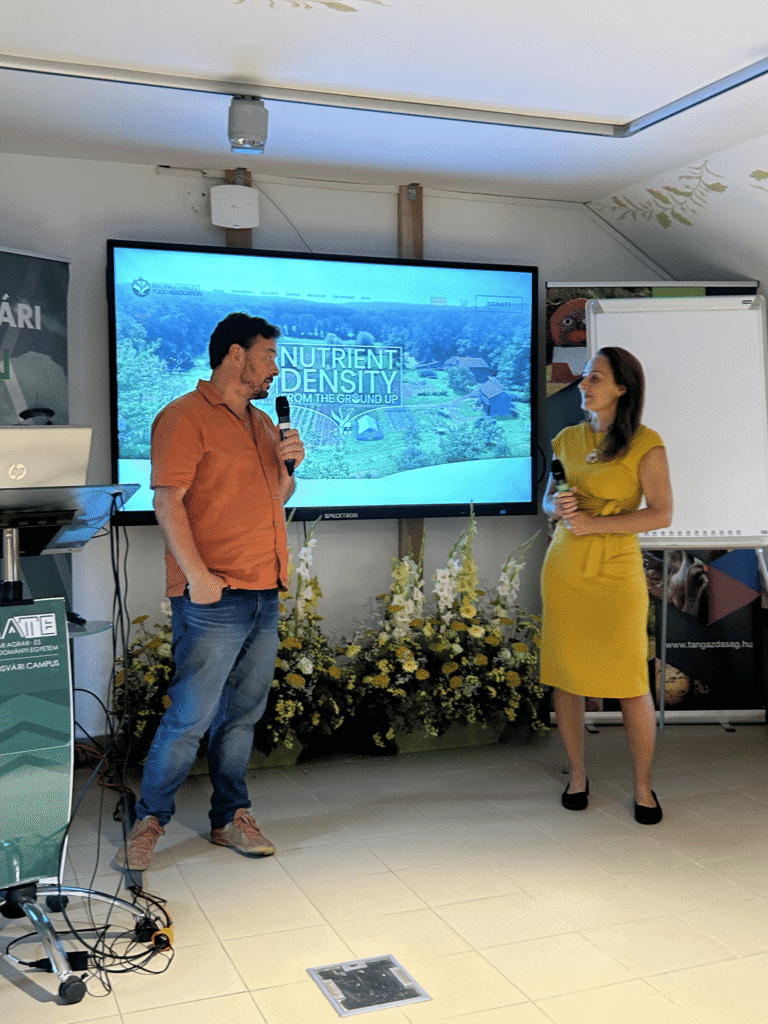
According to their research, the same vegetable can have up to 40 times the difference in antioxidant content depending on the soil in which it was grown.
Highlighted: for the microbiome, moisture and oxygen are just as important as nutrients - and nature always strives to ensure that the soil surface is not left uncovered. The sugars produced by plants feed the soil life, which in turn protects and nourishes the plants.
Vig Vitália (soil ecologist):Living soil - the basis for healthy food
Good soil life is based on diversity: bacteria, fungi, nematodes, mites and worms form the backbone of the ecosystem. Not only is living soil better structured and more aerated, it is also more resistant to disease.
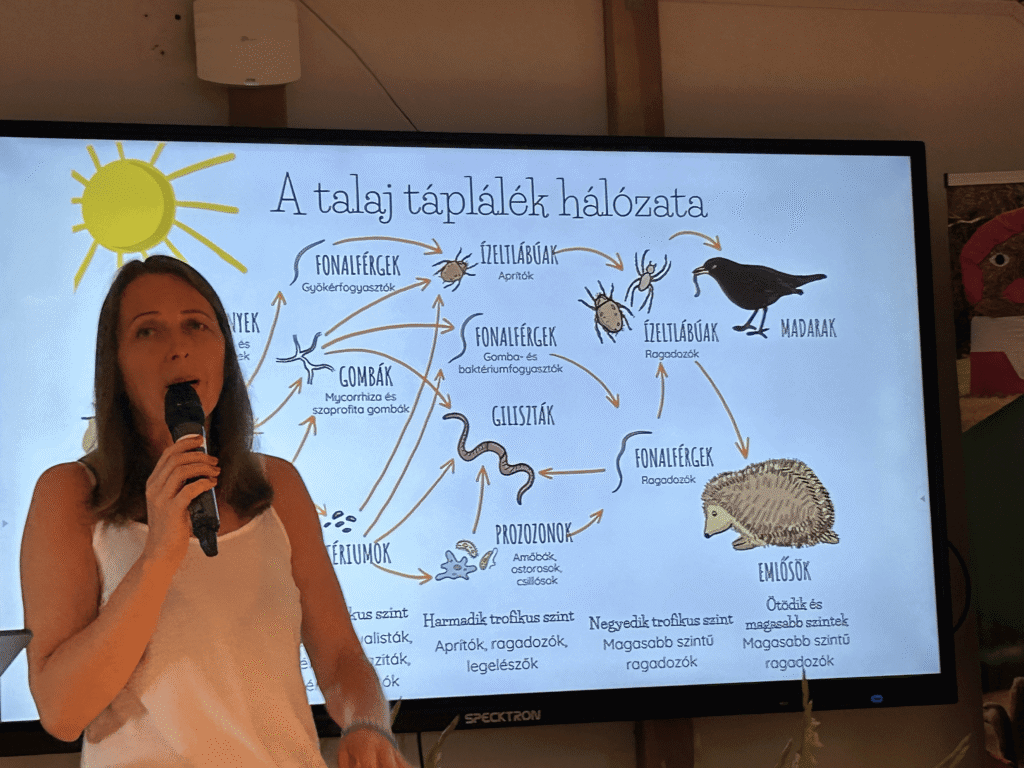
As a practical example, he said: the presence of at least 7 earthworms in a 25 cm burrow is a sign of health. In untilled, mulched soil, this number can be as high as 20-25. Maintaining a microbiome requires year-round vegetation - a cornerstone of a regenerative approach.


 English (UK)
  Magyar