

Soils below pH 6 are said to be acidic
For pH measurement there are products on the internet for under 10.000 Ft, which usually measure the soil temperature as well. It's worth measuring the pH of your garden soil in several places to see how far it differs from the ideal value of 6.5-7from us.
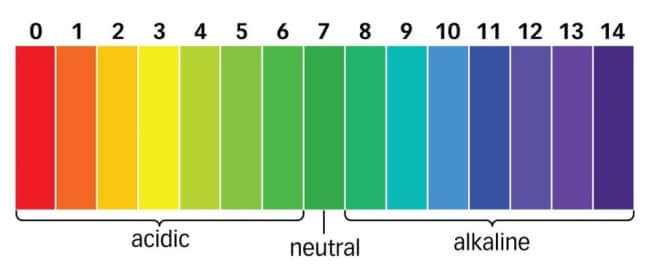
0-7 acidic, 7 neutral, 7-14 alkaline
What causes acidic/acidic pH?
If the amount of hydrogen in the soil increases (H+) then our soil becomes acidic. But where does H+ ion into our soil?
- during the dissolution of almost all fertilisers applied, H+ ions get into the soil, so they acidify our soils! This is why it is also worth avoiding "chemical" fertilisers and turning to organic/organic products.
- Also during the decomposition of organic matter in our soil (leaf, stem and root residues), H+ ions are released into the soil. So soil acidification is a natural slow foyamat.
- The roots of plants also release H+ ions into the soil to be "exchanged" for other useful cations e.g. calcium Ca++, or magnesium Mg++ This is one of the most common ways in which plants take up nutrients through the roots, giving up worthless hydrogen ions for useful nutrients in the soil, e.g. iron, copper, zinc.
This also shows that most of our soils are slowly becoming degraded. More than half of Hungary's soils are acidic, with acidic chemistry.
Why is it harmful to have acidic soil?
- We know that acidic soil is rich in H+ the amount of ions. If there is too much of this, it will displace the useful nutrient e.g. calcium Ca++, or magnesium Mg++, Iron Fe+, copper Cu+, zinc Zn+. Thus, plants will starve in the absence of these useful nutrients.
- Beneficial bacteria and fungi do not thrive in very acidic soil, so they do not function properly. They don't fix nitrogen from the air and don't absorb phosphorus and other nutrients. They are not able to improve the soil.
- In highly acidic soils, large amounts of aluminium can be absorbed Al++and manganese Mn, which is highly toxic to the roots of the plant.
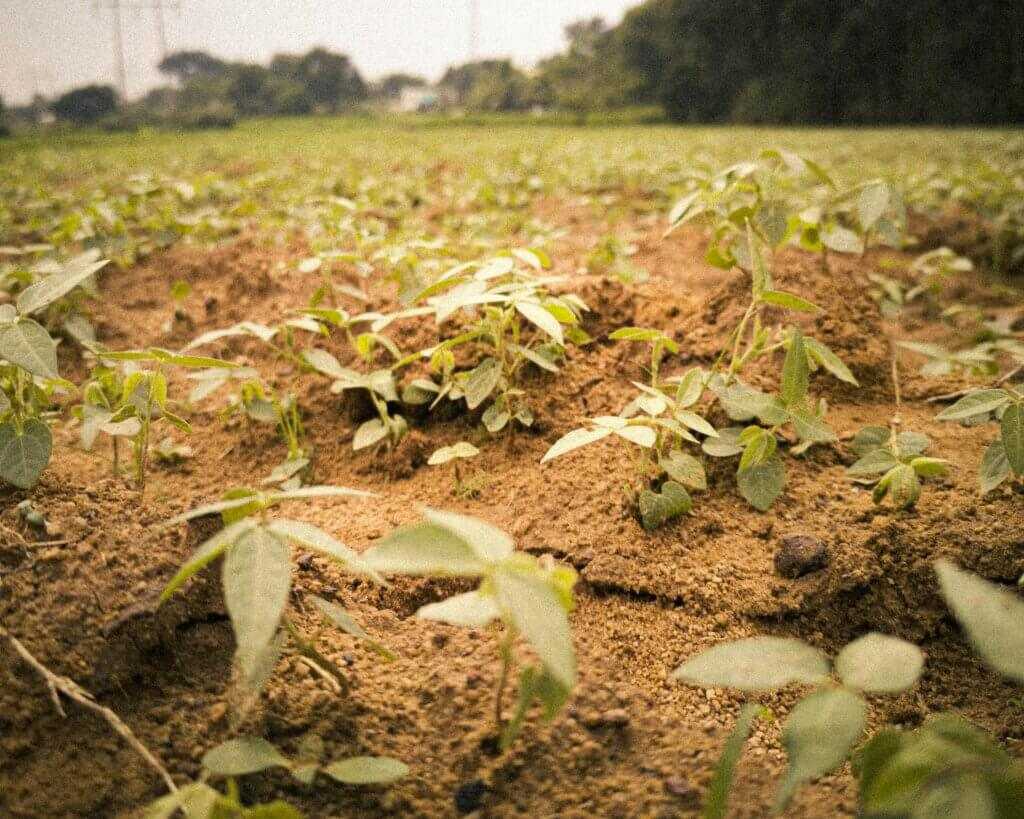
What can be done to restore the ideal pH of 6.5-7?
- Use liming agents that not only remove the acidity from your soil, but also provide the calcium ions that are essential for soil structure.
- You can improve the pH of your soil by increasing the humus content, which can bind harmful hydrogen H+, and aluminium Al++ ions. Organic fertilisers, composts and ready-made humus are also good for this purpose.
- You can increase the humus content of your soil with cover crops, so it's worth sowing the "empty" areas, e.g. Danuba 10M with mycorrhizal cover crop mix

What can the lazy gardener do?
- for the gardener who knows that his soil is acidic but doesn't want to do anything about it, we have good news 😀 plant plants that tolerate acidic pH better, e.g. blueberries, rhododendrons, azaleas, hydrangeas, potatoes and pine halves.
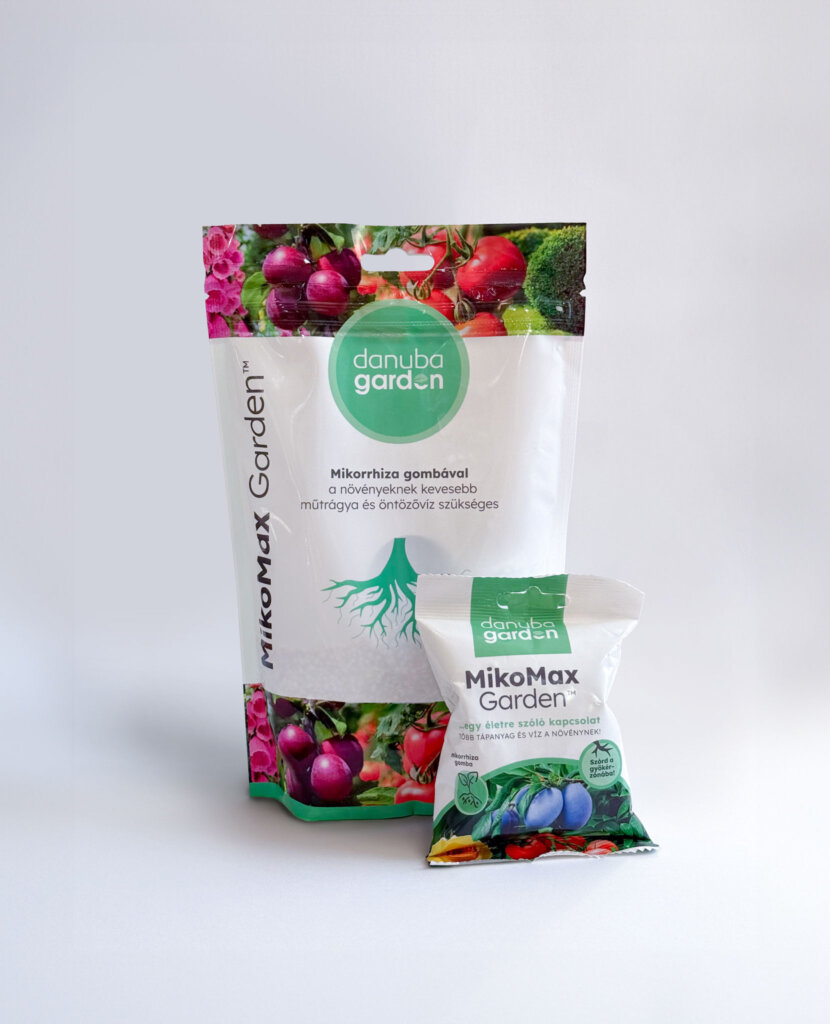
- Mycorrhizal fungi support our plants even at low pH, because it can deliver nutrients to our plants in such acidic conditions. A MikoMax Garden-never miss out when sowing, planting, transplanting!
In summary:
- Measure the pH of your soil. Either buy a soil pH meter or visit Danuba events where free soil tests are available.
- If we have measured our soil and it is below pH 6, it is acidic. We need to move!
- At this point you are either oplanting plants that tolerate it, or improving the soil with lime humus



 English (UK)
  Magyar