
Many of us may wonder what happens to the beneficial microbes in our gardens or those that harm our plants during the cold, winter months. Do they die, or do they lie dormant waiting for warmer conditions?
The cold is not able to cause large-scale destruction of microbes. Rather, the cells can be damaged by the ice crystals that are formed, which cause damage to the cytoplasmic membrane surrounding the cells. At lower temperatures, only their growth and metabolism will stop. So cold basically does not kill either beneficial or harmful microbes, they just go into an inactive state (think, for example, of frozen baker's yeast, which can be reused to make dough by „boiling” it in lukewarm, sugary milk (at the right temperature and in the presence of nutrients)).
Grey mould
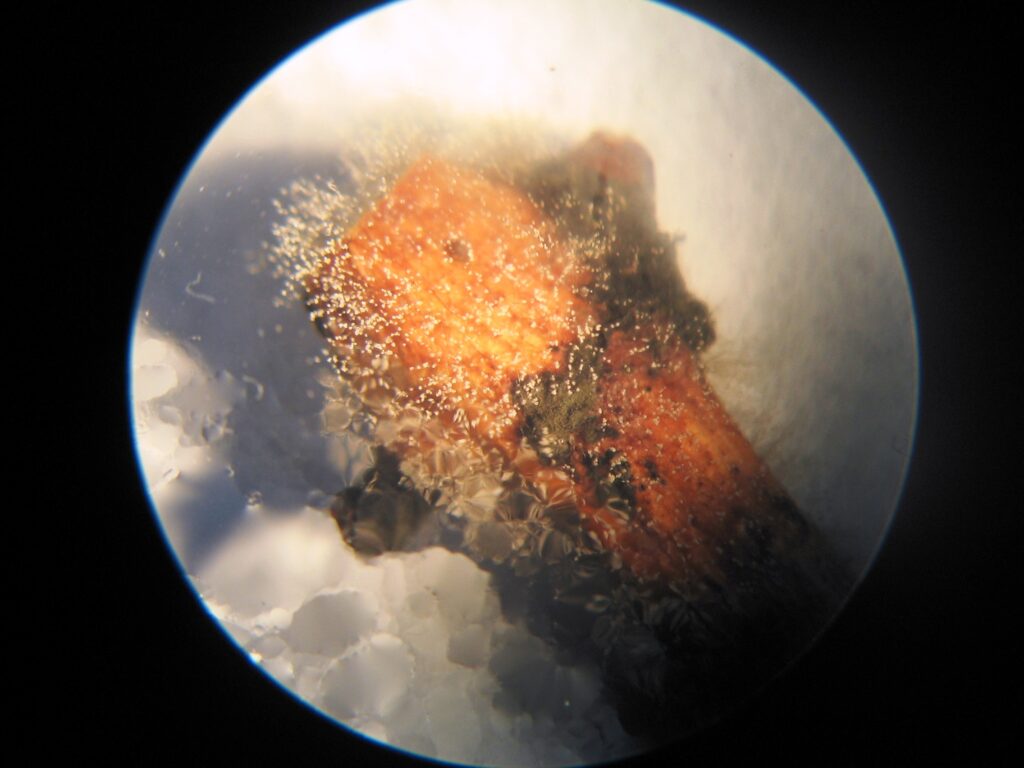
Different microbes start to multiply at different minimum temperatures. Many of the harmful organisms are moulds, such as grey mould pathogen, the Botrytis cinerea, can grow below 0 °C in the presence of humidity, liquid water or plant tissue.
This is one of the reasons for the late autumn aszú grapes, which ripen with noble rot.

The grey mould can damage flowers (e.g. pansies, chrysanthemums, roses), fruit (e.g. grapes, raspberries), bulbs of bulbous plants (e.g. onions) and even leaves (e.g. lettuce).

Similarly, the Penicillium (brush mould) species can grow at temperatures as low as 0 °C. The mould turf is typically green in colour and has a characteristic musty smell penicillium Rot (e.g. green mould on bulbs of onion flowers, onions, bread). Both can damage fruit stored at low temperatures, even refrigerated (e.g. seed rot on apples, citrus and berries).
Also damaging grassland snowdrop (Microdochium nivale), as its name suggests, can also reproduce and cause damage below 10 degrees Celsius.

Peach leaf curl
Likewise, the cold, damp early spring weather is conducive to peach leaf curl the causative agent of Taphrina deformansnak. Many fungi with mycelia, or resistant sclerotia (e.g. sclerotia, microsclerotia), can overwinter on infected plant parts (e.g. canker sores, fruit mummies, fallen leaves) to develop new infections in spring (e.g. monília, theft).
But not only pathogens, but also the biostimulant and plant pathogen repelling and killing moulds that help plants, include microbes that are active in winter conditions, such as those found in Tricho Immun Trichoderma strains.
Bacillus Species
Bacteria include the Bacillus species' resistant endospores can easily survive extreme cold, and are not damaged by ice crystals. However, they can be used in agriculture, Bacillus usually require temperatures above 15 °C for growth.
The activity of bacteria, fungi and radionuclides in the soil slows down considerably at temperatures below 10 °C, but does not stop completely. They will be rapidly activated by spring warming and precipitation, which will be reflected in the mainly Streptomices species, the scent of the earth-scented geosmin molecule will also signal to gardeners.

Written by Prof. Dr. Erzsébet Karaffa


 English (UK)
  Magyar