

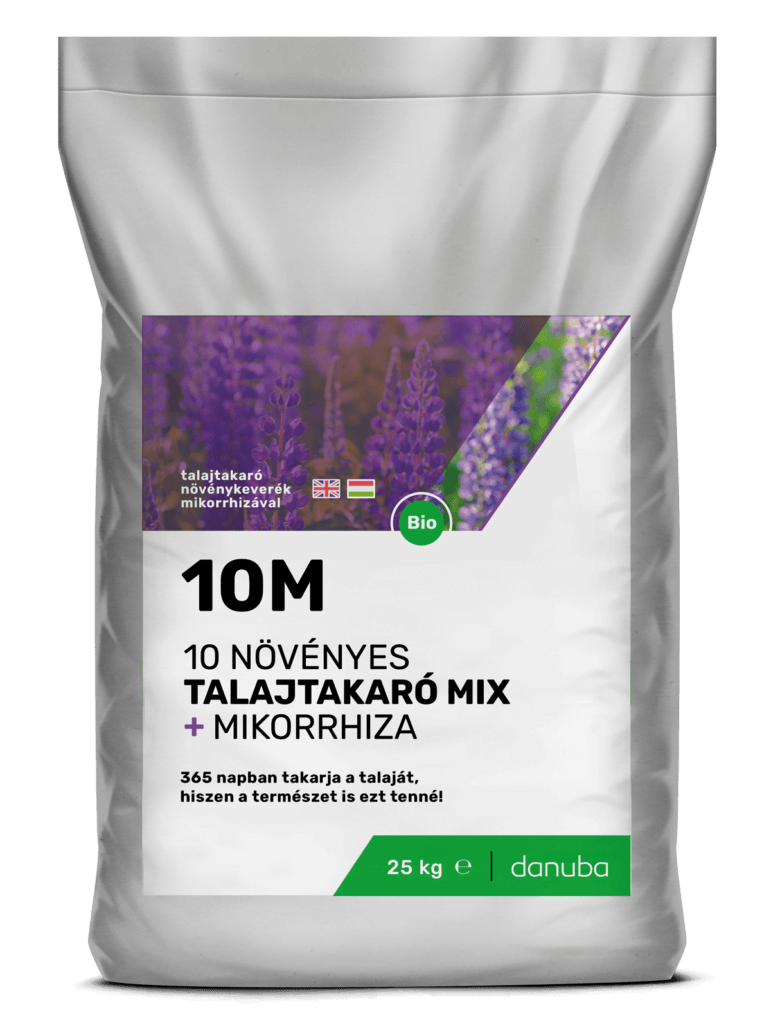
We have written on several occasions about both the importance of mulching and the range of about seed mix (10M). But as we approach autumn, we feel it is timely to revisit the topic. Second or autumn sowings are still not widely practised and often do not cover the same area as the previous sowings, so that the 'bare' (or, worse still, weedy) land is becoming more and more plentiful.
Covering soil with plants in the off-season has many benefits and can be an important part of sustainable gardening. Here are some reasons why you should cover your soil with plants:
- Protection against weeds: Vegetated soil will be less prone to weeds, as the plants shade and cover the soil, preventing weed seeds from germinating.
- Soil moisture conservation: The plants protect the soil from rapid evaporation, reducing the need for irrigation and helping to retain soil moisture during dry periods.
- Prevent soil erosion: The root system of the plants stabilises the soil, making it less susceptible to erosion by rain and wind, especially in hilly areas, shallow soils or loose sandy soils.
- Earth temperature control: Vegetation helps to mitigate soil temperature fluctuations, reducing the heat of summer and the cold of winter.
- Improving land quality: Their root systems help the nutrients to surface. Plants and their decomposition products increase soil richness and the number of organisms, thus improving soil fertility.
- Aesthetic value: The green plant cover gives the garden a natural and attractive appearance, while creating a uniform and orderly environment.
10M-in a little more detail
As its name suggests, it contains the seeds of 10 cultivars.

The highest proportion of butterfly plants(26% Pannonian vetch, 20% Spring vetch, 8% Purple clover, 4% Alexandian testicle, 1% Somchorus). Butterfly blossom plants are characterised by a symbiotic relationship with various nitrogen-fixing bacteria that live in the so-called root nodules on their roots and use the nitrogen content of the air. The fixed nitrogen from decomposing plant matter is eventually released into the soil. About 1-3kg /2 00m2 we can count on fixed nitrogen. These species are also great partners for mycorrhizal fungi and, if allowed to flower, will attract pollinators.
The much stiffer-stemmed species (16% Green Rye, 12% Sand Oats, 4% Flax, 1% Facelia) provide a suitable support for butterflies, making the stand taller and denser, thus increasing its weed suppression capacity. Facelia is also important for plant protection, as its cyanide-containing decomposition products are known to kill/repel nematodes.


after sowing in October, in November of the same year, in April
💚 melioration radish (8%) lever root can reach and break through deeper compacted layers. It has a significant N, K, Ca, S and microelement sequestration effect. It leaves a large amount of organic matter, which increases the humus content, especially the subsoil is utilized faster and gives better quality humus.
Roots from many species with different habitats both loosen the soil properly and create a diverse habitat for soil-dwelling micro-organisms and other organisms. The number of beneficial bacteria in the soil can increase when there is a living root in the soil to secrete sugars into the root zone and feed them. If you have 'bare' soil, there is no living root and the number of beneficial bacteria is significantly reduced. These communities themselves contribute to further improving soil properties.
Micorrhiza fungus 🍄
Product 80g/kg mycorrhiza (M). However, these fungi not only help the cover crop to survive, but also multiply on its roots, so that next year's crop is sown in a "mycorrhiza bed". This ensures they have increased water and nutrient uptake from the start. Mycorrhizal fungi require living plant roots to survive. Therefore, if we want to carry over fungi that have already been used in the middle of the year, we should try to reduce the plant-free soil condition.

How to use it 10M our mulch?
💚 seed mix should be sown shallowly, 2-4 cm deep, so it is sufficient to just plough it in and then tamp it down a little. If the soil is dry, it is advisable to water after sowing to speed up germination. 1 kg of product is sufficient to 'cover/ vitalise' an area of 100-200 m2. Ideal sowing time: March-May or end of August-October. As some species overwinter, the area should be rotated in spring to reuse the area, or it can be planted between the roots after mowing. Without mowing, the stand can reach a height of about 1m.


 English (UK)
  Magyar