




Storage and shelf life: It retains its quality for 3 years when stored in its original packaging at temperatures between 2 and 48 °C. Once opened, it should be used as soon as possible; however, if tightly resealed and stored in a cool, frost-free place, it can be used for 6 months without any loss of quality. The product’s packaging may vary, but the quality of the product inside remains unchanged.
🧐 Did you know?
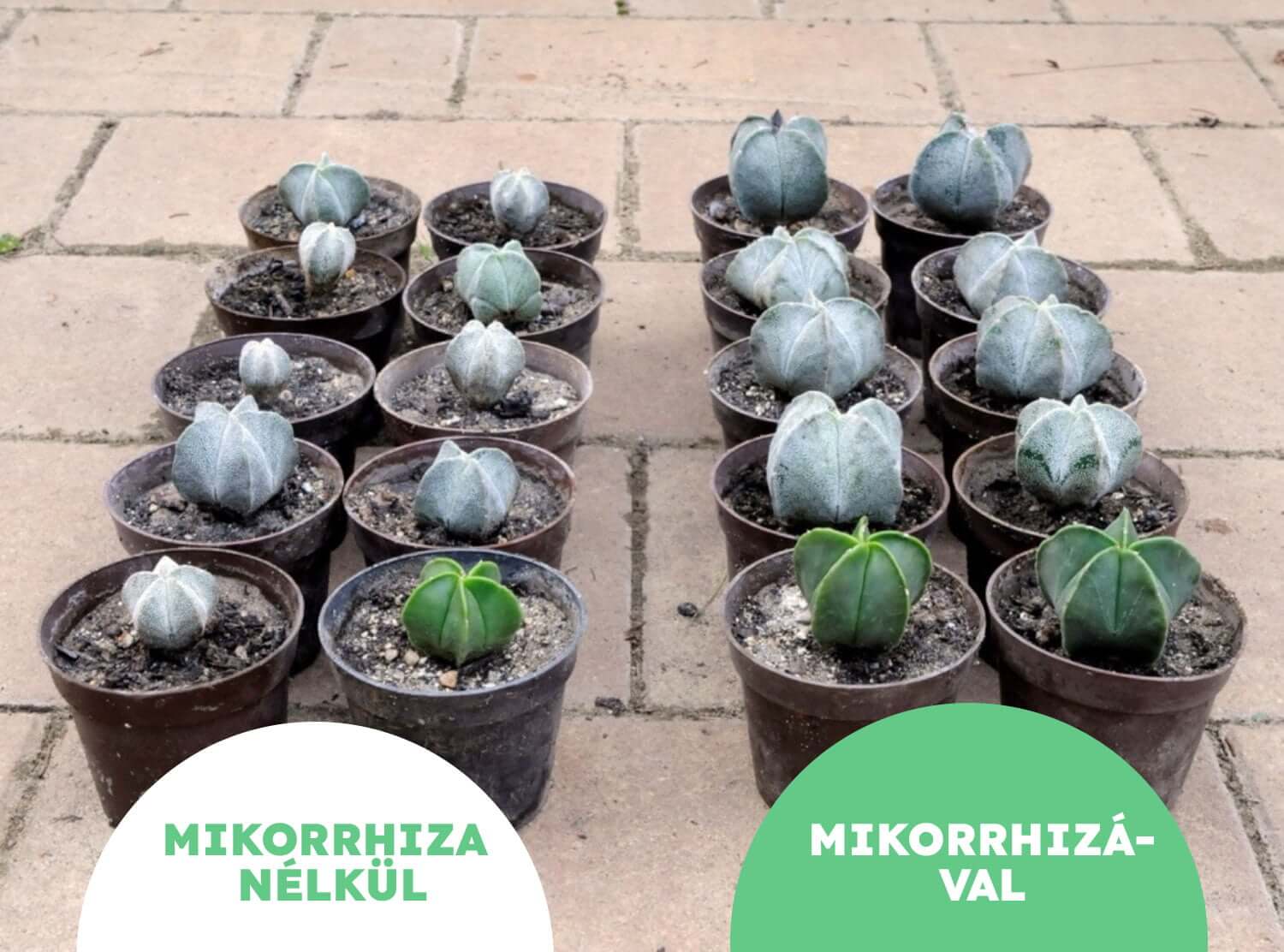
Mycorrhizal fungal species form a symbiotic relationship with the host plant, increasing its water and nutrient supply, stress tolerance and resistance to pests.
🍄 More about Micorrhiza
It symbiotically interacts with the host plant, supporting it in taking up adequate amounts of water and nutrients during stressful periods such as frost or drought. The mycorrhiza, with a hyphal filament many hundreds of times the size of the host plant's root, can take up water and nutrients from much further away and more efficiently for the host plant.
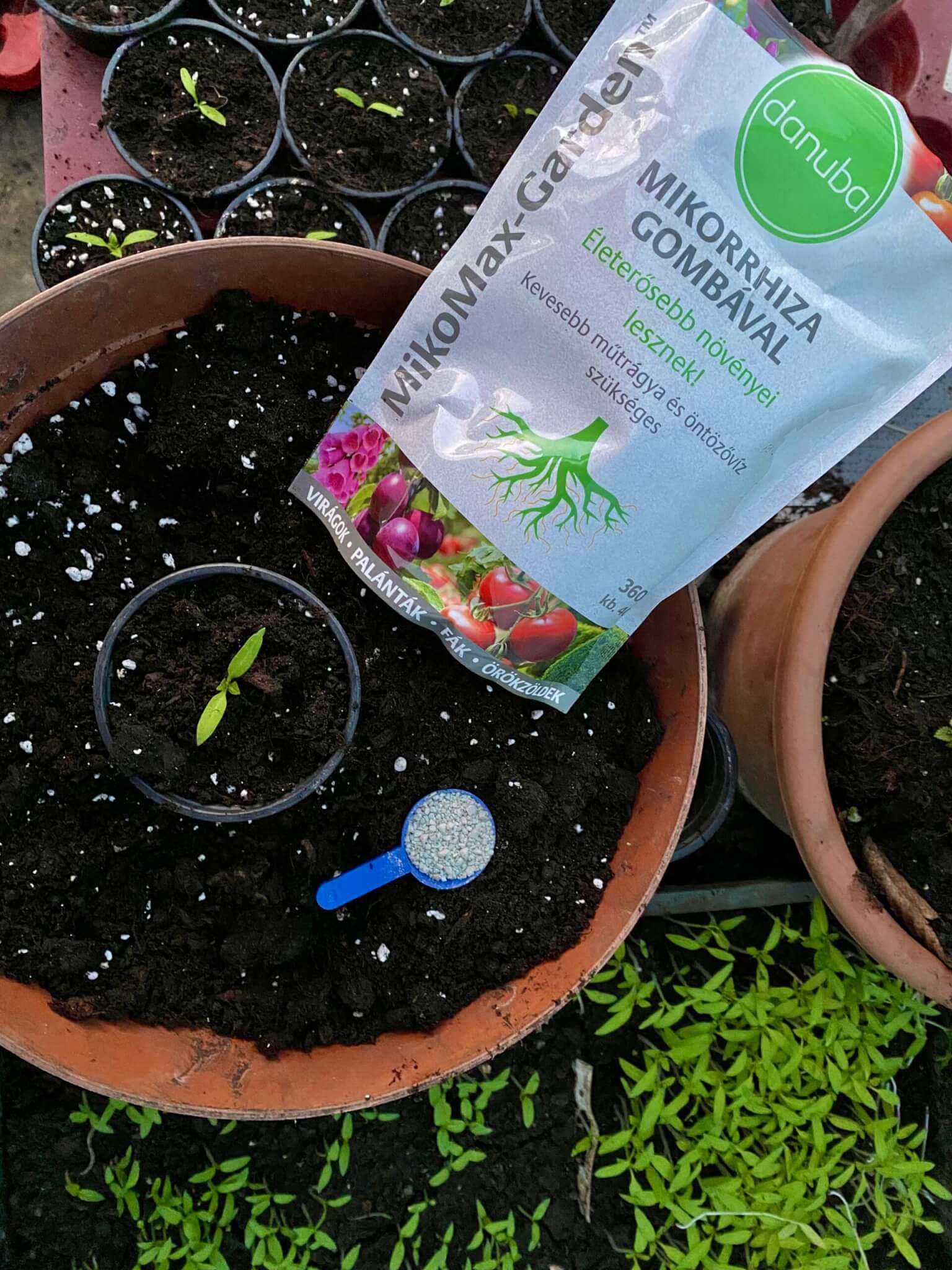
Since mycorrhizal fungi need root contact, we need to get them close to the root, max 1-2 cm from the root, when applying. For larger trees, it should be applied around the canopy in several places under the canopy stump. It is recommended to apply to the smaller, thinner roots.

The mycorrhizal fungus penetrates the host plant and strengthens its natural immune system, making it more resistant to fungal diseases. Mycorrhizae secrete substances that increase and improve soil aggregates, which are among the most important components of soil.
🤝 Why is this cooperation good for the crop and how is it achieved?
Early in their growing season, plants get natural help from mycorrhizal fungi to take up more water and nutrients. At this time, the plants secrete substances that attract these fungi and encourage them to use part of their hyphal filaments to penetrate the roots of the crop.
🌱 Lawn care with Micorrhiza

🤝 Why is this cooperation good for the crop and how is it achieved?
Early in their growing season, plants get natural help from mycorrhizal fungi to take up more water and nutrients. At this time, the plants secrete substances that attract these fungi and encourage them to use part of their hyphal filaments to penetrate the roots of the crop.
The plant senses whether it can absorb water and nutrients from the soil on its own or whether it needs nature's help. If it senses that it needs help, it secretes ready-made nutrients, carbohydrates, amino acids and other signalling substances produced by itself into the soil through its roots. The mycorrhizal fungus senses this signal, and it moves towards the root and then penetrates the root.
💪 This is how mycorrhizal fungi save ornamental plants from drought!
Have you ever wondered how some plants manage to thrive even in the hottest heatwaves and driest conditions, whilst others wither away completely?
The secret lies not on the surface, but in the soil, at the level of the roots. There are, in fact, beneficial soil fungi – known as arbuscular mycorrhizae – which form a lifelong, mutually beneficial partnership with our plants. The fungus’s fine network of filaments completely interweaves the soil and is able to absorb water and nutrients (such as hard-to-access phosphorus) even from places that the plant’s tiny hair-like roots cannot reach. In return, the plant nourishes the fungus with the sugars produced during photosynthesis. This collaboration increases the plants’ resilience to climate change, drought and heat.
This is confirmed not only by gardeners’ experience but also by scientific experiments. For example, when the popular marigold (calendula) was studied, plants treated with the fungus were found to have chlorophyll and carotene levels 60% higher than untreated plants, and their flowers were also much more beautiful and larger. Despite the drought, the copper flowers grew 20–22% larger with the help of mycorrhizae, whilst in the case of garden marigolds, the fungus protected the plant cells from damage, so the flowers managed their water much more efficiently and were more luxuriant. Tests carried out on lily varieties also show that this underground symbiotic relationship reduces stress-induced cell death at a biochemical level and activates the plant’s own internal defence system. If you want your ornamental plants to survive and thrive even during the driest summer months, mycorrhizal fungi are the real solution!
Bibliography:
Abdul-Wasea A.A., Elhindi, K.M. (2011). Alleviation of drought stress in marigolds (Tagetes erecta) plants using arbuscular mycorrhizal fungi. Saudi Journal of Biological Sciences. 18, 93–98.
Bagheri, V., Shamshiri, M. H., Alaei, H. and Salehi, H. (2019). Effect of three species of arbuscular mycorrhizal fungi on the growth and nutrient uptake of Zinnia plants under drought stress conditions. Journal of Plant Productions (Scientific Journal of Agriculture). 41, (4), 83–84.
Asrar, A.A., Abdel-Fattah, G.M., Elhindi, K.M. (2012). Improving the growth, flower yield and water relations of snapdragon (Antirhinum majus L.) plants grown under well-watered and water-stressed conditions using arbuscular mycorrhizal fungi. Photosynthetica. 50, (2), 305–316.
Hussain, H.A., Liang, Z., Hussain, S., Luo, J., Sui, S., Liu, D. (2026). Harnessing Arbuscular Mycorrhizal Symbiosis to Enhance Growth and Resilience to Combined Drought and Heat Stress in Lily (Lilium et al.). Plants. 15, 767.







 Magyar
 English (UK)