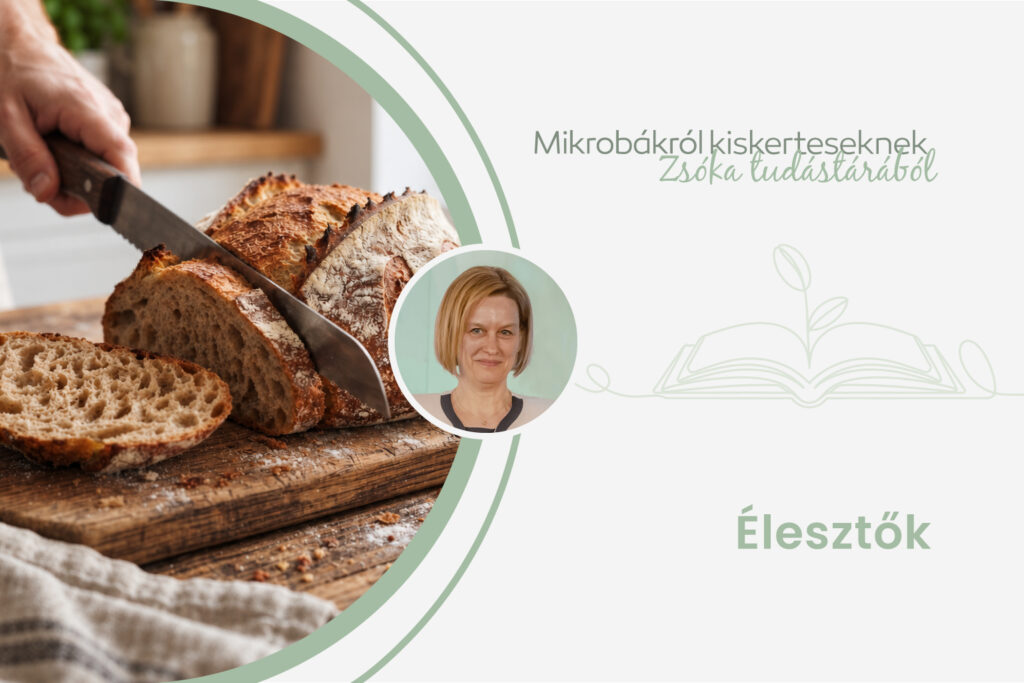
What brings bread to life?
The role of yeast in the preparation of our food
If we look at a loaf of freshly baked bread or a glass of beer, we might not even realise that the same tiny organisms play a key role in the production of both.
From yeasts single-celled fungi that have been helping humans to produce food and drink for thousands of years.
As we have seen in previous sections, lactic acid bacteria and yeasts are naturally present on the surface of plants. These play an important role not only in the production of fermented vegetables, but also in the production of bread, wine and beer.
Yeasts utilise sugars as a source of nutrients. During this process, the sugars are converted into alcohol and carbon dioxide is produced. The juice of grapes and other sweet fruits contains a lot of readily available sugar, which is why yeasts multiply rapidly in them and initiate alcoholic fermentation. This is how wines and many other fermented drinks are made.
💚 beer The process is one step more complex than that. This is because cereal grains consist mainly of starch, which yeast cannot utilise on its own. Therefore, the first step in brewing is the malting, when barley or other cereals are germinated.
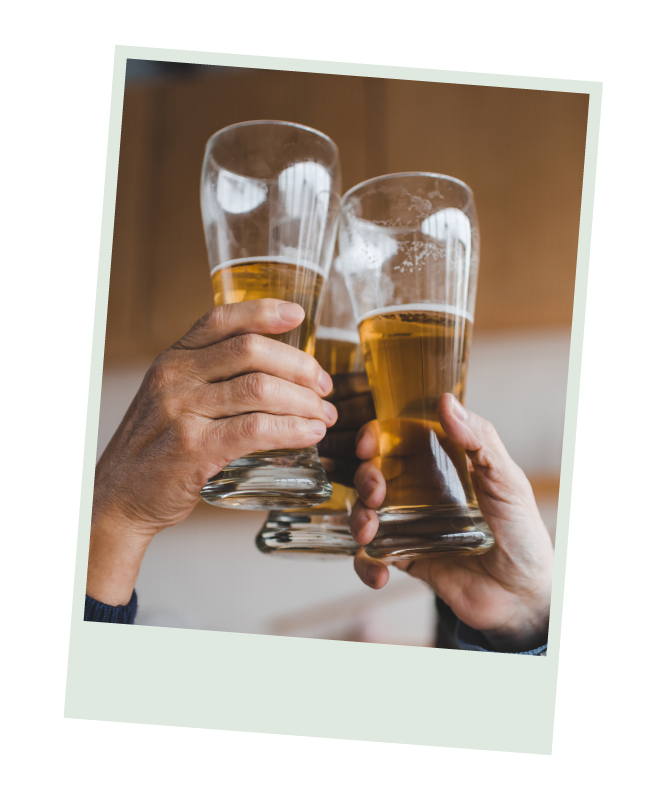
The enzymes in the germinating grain convert some of the starch into sugars, after which the process is halted by drying and heating. The resulting malt is used to make wort, to which yeast is added. Yeasts convert sugars into alcohol and carbon dioxide. It is usually the hops that give beer its characteristic bitter taste and aroma.
What do beer and bread have in common?

Both are yeasts It owes its distinctive characteristics to this process. In bread dough, the carbon dioxide produced by the yeast creates tiny gas bubbles, which cause the dough to rise and give the bread its light, airy, porous texture.
During baking, the yeast cells are destroyed and the gas and alcohol are released, but the structure that has formed remains intact.
Yeast does not only find its way into food in the form of baker’s yeast. It is also present in many places in nature: it can be found in on the skin of fruit, a in the air and the in our surroundings.
When brewing traditional sourdough or certain craft beers, these natural, so-called wild yeast starters may also be involved in fermentation. In industrial food production, however, carefully selected yeast strains are generally used to ensure that fermentation is always consistent and safe.
What is worth bearing in mind about yeasts?
Yeasts are single-celled fungi that convert sugars into alcohol and carbon dioxide. It is thanks to this natural process that we have, amongst other things, the light, airy texture of bread, as well as the production of wine and beer. Yeasts can occur naturally, but during food production we often inoculate the raw materials ourselves to achieve controlled, safe fermentation.
Final thoughts on the series
Microbes surround us, though we cannot see them. They live in the soil, on plants, in our food and even on our own bodies. Some are beneficial, some are neutral and some are pathogens.
If we learn about this invisible world, not only will we be able to garden and store our food more safely, but we will also be able to understand that Without microbes, neither nature nor our everyday lives could function.
Please refer to the previous chapters!
Follow us on our social media channels too!
You can purchase our products from our online shop or from our retailers. You can find further information about our products and their dosages at the www.danubagarden.hu on the website.
 Magyar
 English (UK)