
May, after the Frost Saints, is the peak season for planting out seedlings. To ensure that your home-grown or shop-bought seedlings thrive, it’s worth following the practical advice below.
The Plan: What should we plant where?
When planning, take the individual needs of the plants into account. A plant planted in an unsuitable spot is more susceptible to disease. It is also worth paying attention to plant combinations – which plants thrive when grown close to one another.
A seedling will only ”take root’ if the soil structure and nutrient content are suitable. If the soil is depleted, we need to replenish its nutrients!
Proposed solution: Always let’s mulch! The slow decomposition of natural mulch enriches the soil with organic matter and also helps to retain moisture and prevent weeds.
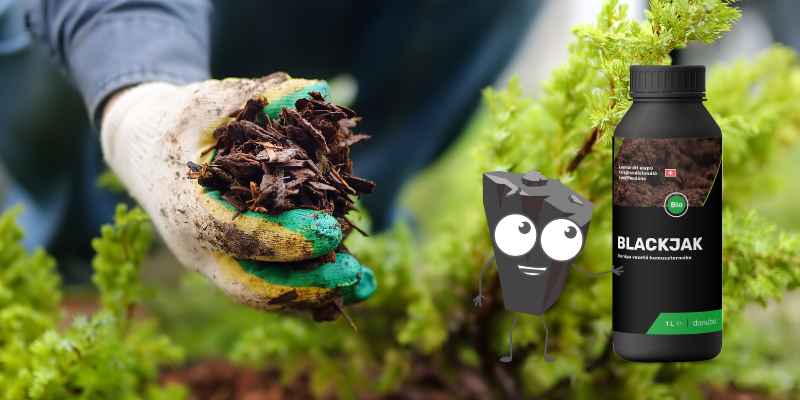
We can also supplement this with various solid organic fertilisers or liquid humic acid preparations: Blackjak...offers a quick and effective soil-improvement solution.
Let’s wait until both the soil and air temperatures remain consistently above 10–15 degrees. Planting too early can cause shock!
Root protection
The relationship (symbiosis) between the root system and fungi is crucial. If the area was previously bare, the number of beneficial microorganisms may decrease.
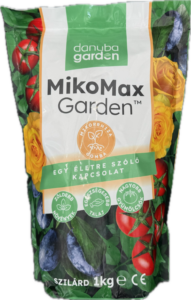
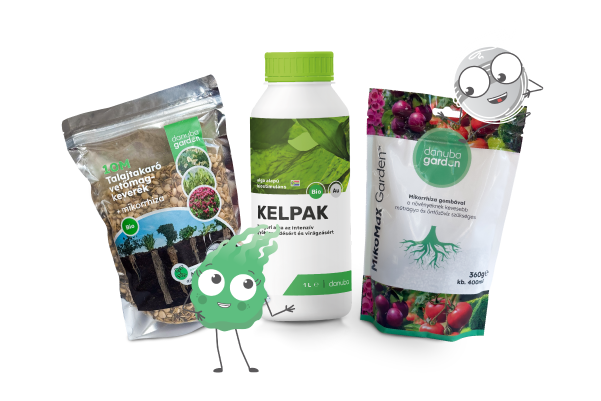
Suggested solution: Placed in the planting hole Mikomax Mycorrhizal fungi help the root system to spread; through fungal filaments, the plant can access more water and nutrients.
We can also use algae to promote root establishment; for this purpose, the auxin-like Kelpak the perfect solution.
Autumn tip: Maintaining soil life is an ongoing objective, which we can achieve by ensuring there are always living roots in the soil. Once the vegetables have been harvested, 10M Soil cover seed mix By sowing, we not only add nitrogen to the soil, but the many living roots also provide a habitat for microbes even in winter.
Plant protection and immunity
Avoiding monoculture (by practising crop rotation) can prevent the build-up of pathogens. Avoid planting nightshades (tomatoes, peppers) one after the other!
Proposed solution: For fungal diseases (perosporosis, botrytis, powdery mildew), use a plant-based probiotic such as Tricho Immun. Once everything has come up and we’ve planted out all the seedlings, it’s worth doing a one-off 50 g Tricho Immun + 2 dl Asco Alga Spray the entire foliage of the crop with the mixture in 10 litres of water.
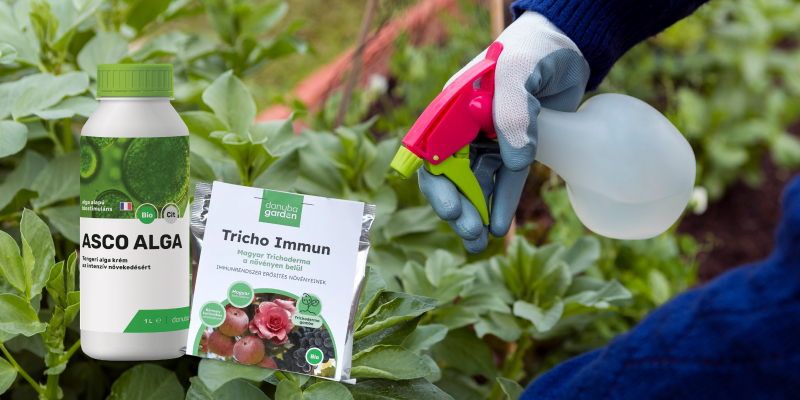
The advantage of the algae-based combination is that it penetrates more quickly into the Trichoderma fungi It penetrates the plant, ensuring the spray is well absorbed by the leaves, and, what’s more, it continues to nourish the plant through its hormonal effects.
Further care
To encourage flowering: Kelpak
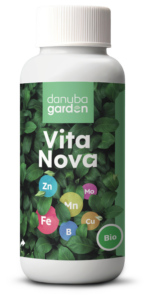
To prevent micronutrient deficiencies: VitaNova
Occasional plant protection
If the weather conditions make the plants susceptible to fungal infections, or if we notice a minor insect infestation, then the following can be used successfully: SoftGuard „kitinjében”, the power inherent in chitosan: it repels small insects, inhibits the spread of surface fungi and stimulates the plant’s immune response.
In the event of an insect infestation, this can be supplemented with a contact-action product: MicrOillal. This sunflower oil micro-emulsion, enriched with nettle and other plant extracts, suffocates insects, whilst its scent keeps them at bay.


 Magyar
 English (UK)