
Soil quality is proportional to the amount of humus in the soil. A higher humus content means better-quality soil! How can we increase the humus content of our soil?
First of all, let’s make it clear that…
What is the difference between the organic matter content of soil and its humus content?
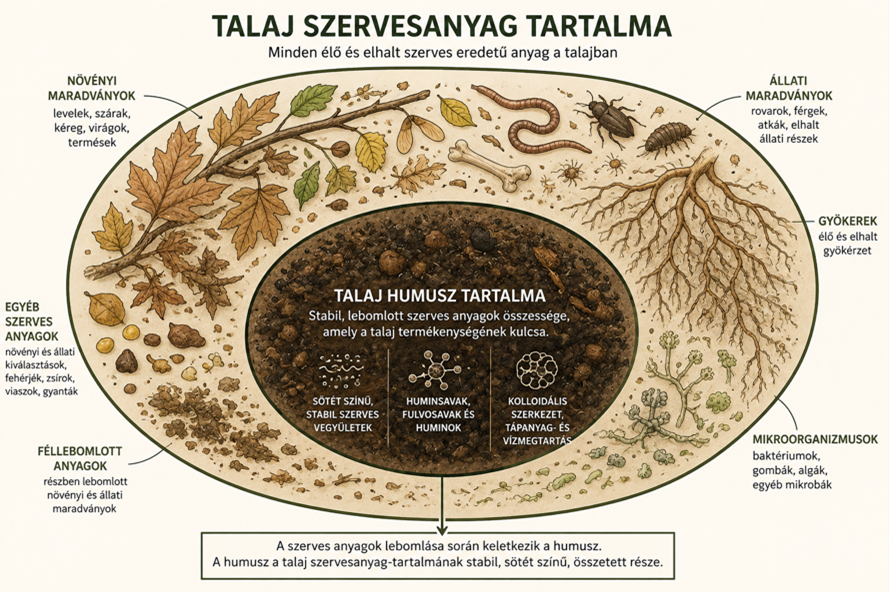
As can be clearly seen from the image above, the humus content of the soil actually accounts for only a small proportion of its total organic matter content. Nevertheless, it is this humus that provides the soil with its main capacity to retain and supply water and nutrients.
What happens to plant debris above and below ground?
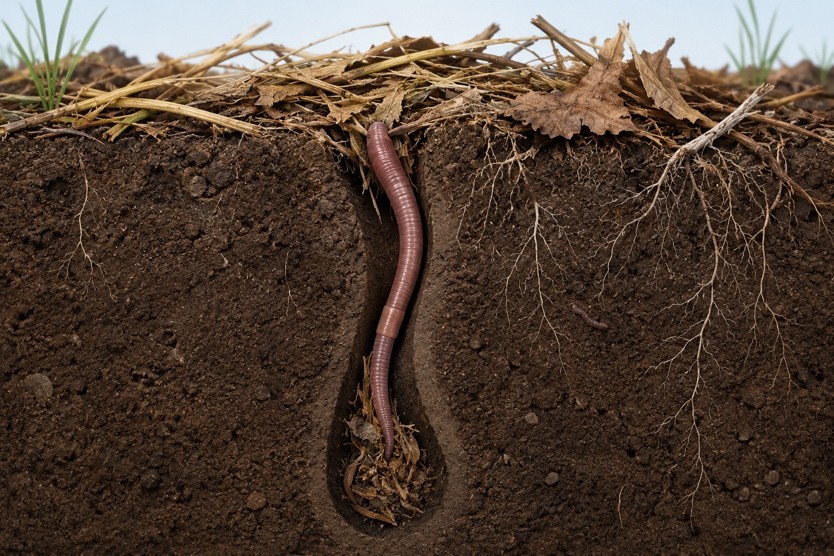
1. From the dead leaves and stems lying on the ground, the mulch is formed. This cover, like a hat on a person, protects the soil from the scorching sun’s rays and prevents it from overheating and drying out.
These above-ground remains, found in the soil, earthworms They burrow into the soil and consume it. The nutrients in earthworm castings are 2–3 times more readily absorbed by the plant’s roots than those in the soil.
2. From the underground part of the plant – the root – and the tissue surrounding the root Most humus is formed from the remains of bacteria and fungi.
How does a cover crop help to preserve humus?
Let there always be plants in our soil, because the microorganisms around it produce humus. In other words, if we do not grow any plants, for example, when we harvest the vegetables from the raised bed, then let’s plant some ground cover!
According to a South African study, the Soil covered with plants is 10–15 °C cooler, as it was left bare. If the soil temperature rises above 50 °C, the soil dries out to such an extent that all life within it ceases.
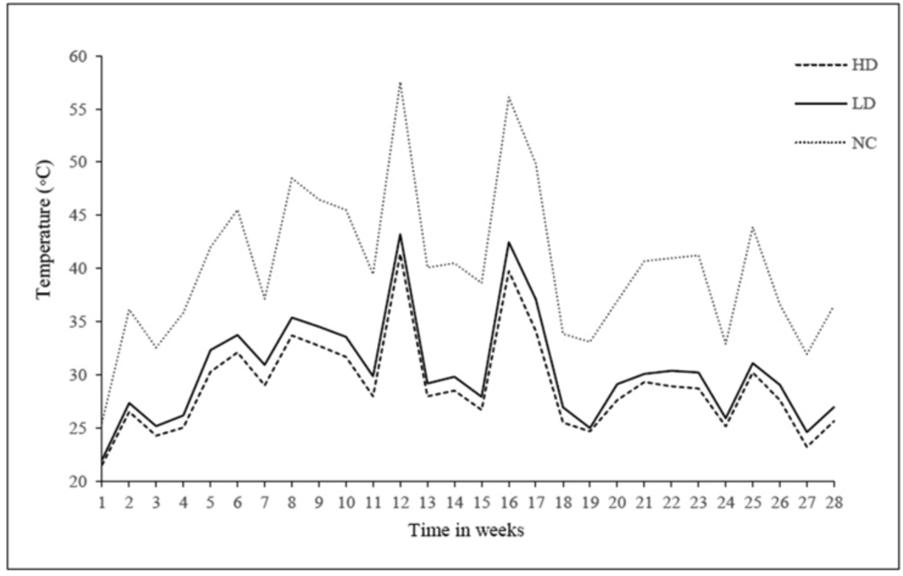
HD (high density) indicates high plant density, whilst LD (low density) indicates low plant density. NC (no cover) refers to uncovered soil. The horizontal axis shows time in weeks, whilst the vertical axis shows temperature in degrees Celsius. The dotted line is always lower, meaning that densely covered soil is even cooler!
So, what sort of cover crop should we sow after the crop?
- Let’s include as much as possible plant seed, so that they are able to adapt to different types of soil.
- Must contain butterfly plantssubstances that can be used to capture nitrogen from the air.
It complies with this Danuba 10M a seed mixture for cover crops?
Yes!
What’s more, mycorrhizal fungus It also contains spores, which provide the sprouted plants with extra nutrients and water!
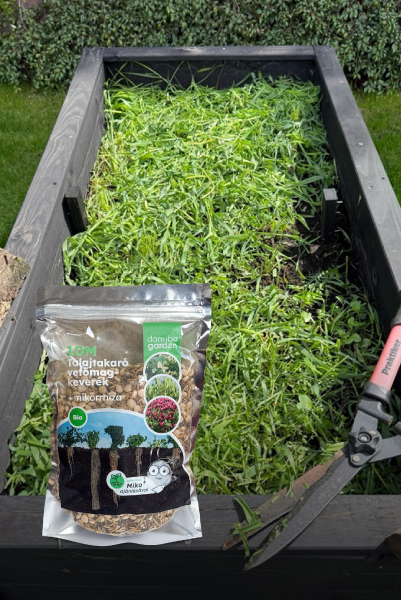
We can cut back the cover crops that were sown and have sprouted in the autumn in the spring, before sowing or planting out. They’ll form a lovely layer of mulch on the soil surface. And the mycorrhizal fungi that have multiplied in the soil will also help our plants sown or planted in the spring!
In fact, if we want to do something to improve our soil before we start laying out our new garden, let’s 10M seed mixto the area.
So by the time we are ready to start landscaping, the soil’s organic matter content will have increased, its structure will have improved, and the cover crop will also protect the soil from drying out.
There’s always something new to discover in the garden!
Would you like some more tips on mindful plant care?
Follow us on Instagram too, and get some ideas for a more mindful,
For healthier gardening!
You can purchase our products from our online shop or from our retailers. You can find further information about our products and their dosages at the www.danubagarden.hu on the website.

 Magyar
 English (UK)